Conclusion and Recommendations
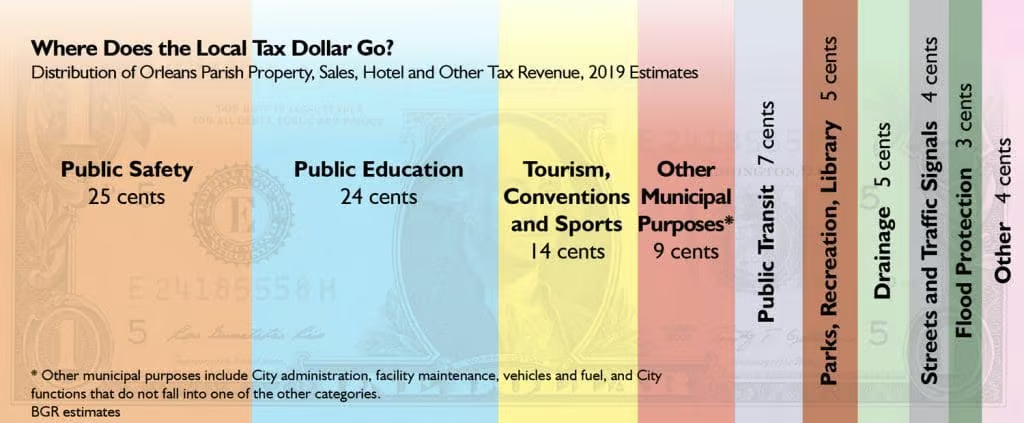
BGR restates and expands upon its core recommendation from The $1 Billion Question by calling for a reevaluation of local tax dedications in Orleans Parish to identify opportunities for redirecting revenue to fund necessary improvements to infrastructure and public services. While some needs may require additional revenue from the public, policymakers owe it to citizens to deploy existing resources optimally before asking them to pay more. This is particularly important given the $154 million growth in local tax revenues since 2015. The Legislature should begin the reevaluation process in the current session by considering the most clearly justified tax rededication options. At a minimum, it should take action to increase the City’s annual share of hotel taxes by at least the equivalent of a 1% tax ($12.3 million currently).
Looking beyond the legislative session, the City should develop a comprehensive, long-term plan for funding high-priority needs. This should include reevaluating the City’s current spending priorities. If City tax revenues continue to grow at a rate that exceeds inflation, the plan should direct a portion of this growth to critical needs. The plan also should evaluate additional tax rededication options for future legislative action and set priorities for how the City will use any revenue it receives.
If these rededicated and reallocated revenues prove insufficient, any proposals for new taxes or user fees should reflect the plan’s priorities. For any tax proposition, the City should demonstrate that it is necessary to meet a high-priority need, appropriately sized and likely to produce effective outcomes for which it will be held accountable. In weighing options to generate new revenue for drainage and street improvements, the City should strongly consider the advantages of alternatives to property taxes, such as user fees that better connect use of the infrastructure and the charge associated with it.
Looking Ahead…
In a future report, BGR will analyze growth in City budgets during the past decade to identify changes in its funding priorities. This analysis is another step toward achieving the effective use of existing public revenues.