

On October 1, 2026, New Orleans’ monthly sanitation fee rose from $24 to $32.25, and starting in 2028, it will adjust every year to match the cost of trash service. BGR’s new report finds the change is a sound way to end a costly budget gap, but without regular oversight of trash contract costs, residents could end up paying more than they should.
Read the More Cash for Trash summary (PDF) | Read the full More Cash for Trash report (PDF)
Why New Orleans’ Trash Fee Went Up
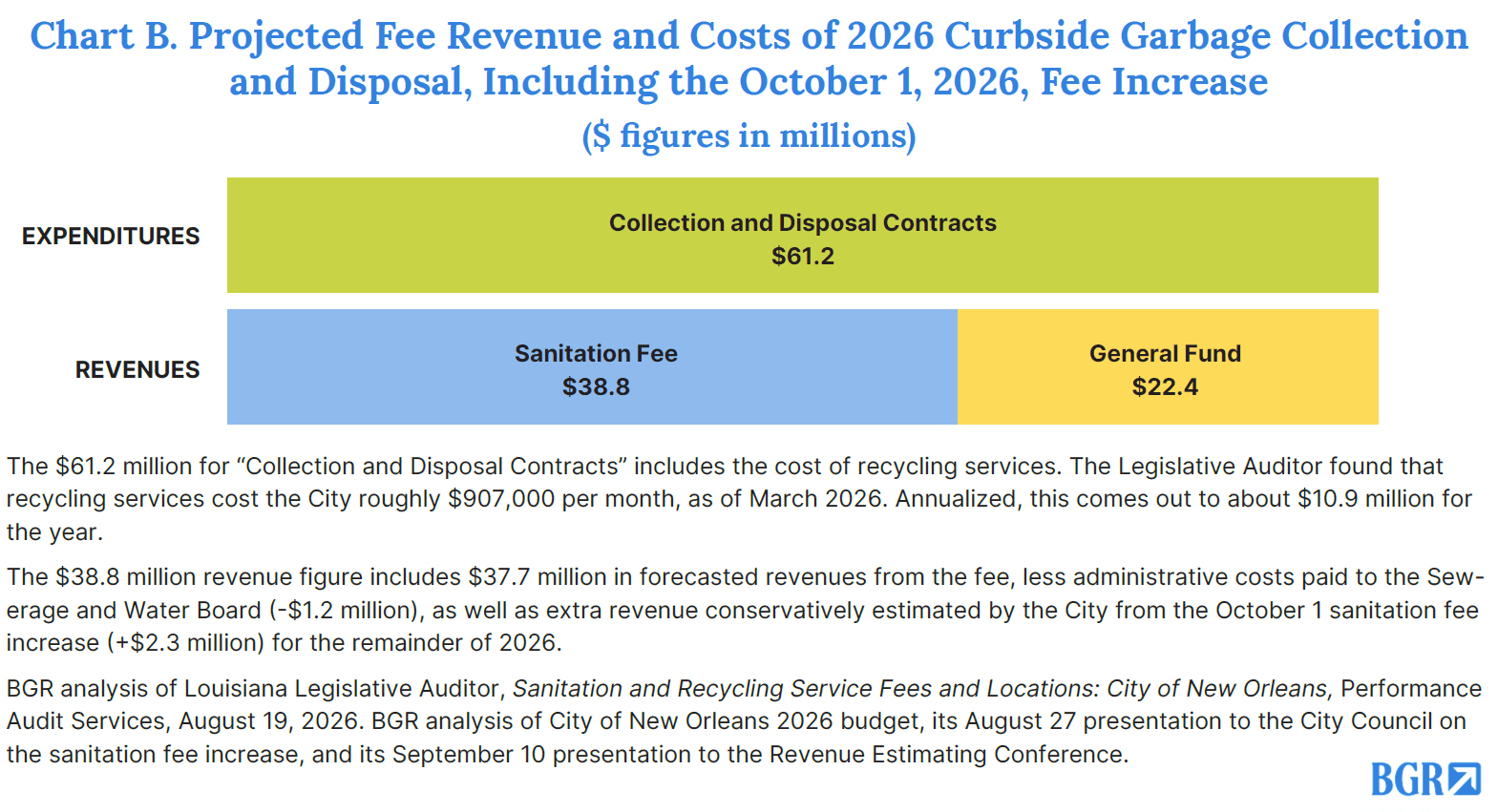
Before October 2026, New Orleans’ sanitation fee hadn’t changed since 2011. Meanwhile, the cost of collecting and disposing of the city’s trash rose from $35.7 million in 2021 to a projected $61.2 million in 2026, driven largely by new contracts signed after Hurricane Ida.
The City covered the difference with General Fund dollars, money that could have paid for police, streets and other services. Based on current budget projections, BGR estimates that from 2021 through 2027, that subsidy will total $80.6 million. In 2025, the trash deficit made up about 20% of the City’s $130 million budget shortfall.
In September 2026, the City Council adopted an ordinance that raised the fixed fee on October 1 and ties it to the cost of service starting January 1, 2028. Even with the increase, BGR projects a $22.4 million shortfall in 2026 and about $6.4 million in 2027. The City’s current effort to verify eligible customers could help reduce that deficit.
Sanitation Fee Timeline: What Changes and When
- October 1, 2026: Residential fee rises from $24 to $32.25 a month; non-residential fee from $48 to $64.50.
- October 19, 2026: City Council hearing on the Department of Sanitation’s 2027 budget.
- Spring 2027: City expects to complete verification of curbside sanitation customer lists.
- October 1, 2027: The City must publish the first new fee and explain how it was calculated.
- January 1, 2028: The new fee takes effect.
How New Orleans Can Protect Ratepayers
BGR recommends that the City:
- Verify its customer list regularly and review contractors’ collection lists monthly, so the City pays only for locations that should be served.
- Require a full review of trash contract costs and service levels at least every five years. BGR suggests more frequent reviews in the initial years of the new cost-based fee.
- Publish an annual public report on trash and recycling performance, costs and affordability, alongside each year’s fee adjustment.
- Analyze service options, including twice-weekly pickup and alternatives to the current recycling program, with the costs and tradeoffs of each.
Key Findings on New Orleans’ Sanitation Fee
- A cost-based fee is a sound solution, but it only covers the revenue side. The new ordinance does not require the City to check whether trash costs are reasonable before passing them on to residents.
- The City plans to regularly check its customer list. The City pays contractors based on the number of locations they serve. An August 2026 Louisiana Legislative Auditor report found nearly 13,000 potentially ineligible locations, such as vacant or duplicate properties. The City’s Inspector General flagged the same problem in 2010. The City is verifying its lists, a process expected to be complete by spring 2027, and plans to establish guidelines for regular review before the cost-based fee takes effect. The initial verification could reduce the projected budget deficit.
- All ratepayers share the cost of recycling. Curbside recycling costs about $11 million a year. Only 41% of households have signed up, but the City pays contractors to serve every location.
- Key service questions remain open. Some residents want twice-weekly trash pickup restored, which the City estimates would cost about $12 million more a year. The public needs more in-depth information about the costs, benefits and tradeoffs of trash collection options, as well as alternatives for the recycling program.
Frequently Asked Questions
Why did my New Orleans trash fee go up?
The fee hadn’t changed since 2011, while trash collection and disposal costs rose sharply after new contracts were signed following Hurricane Ida. The City had been covering the gap with General Fund dollars.
How much will the trash fee be in 2028?
It will depend on the actual cost of trash service. The City must publish the new fee, and explain how it was calculated, by October 1, 2027.
Does the sanitation fee pay for recycling?
Yes. Recycling costs are included in the fee, even though only about 41% of households have signed up for curbside recycling.
Will New Orleans bring back twice-weekly trash pickup?
The City hasn’t proposed changing the current once-weekly schedule outside the French Quarter and Downtown. It estimates twice-weekly pickup would cost about $12 million more a year. BGR recommends the City analyze the options and their costs.
What does BGR recommend?
BGR recommends regular verification of the City’s customer list, preferably monthly; a required cost review at least every five years, with more frequent reviews in the initial years of the cost-based fee; an annual public report on service and costs; and a public analysis of service options for trash collection and recycling.
Read the Report
Get the key takeaways in the brief More Cash for Trash summary, or explore the details in the full report.
Read the More Cash for Trash summary (PDF) | Read the full More Cash for Trash report (PDF)