Key Findings in Learning Curve
As unified local governance of New Orleans’ unique, decentralized system of public education takes root, the community is asking two critical school funding questions: What constitutes fair allocation of public dollars among independently-operated schools? And is the unified district, NOLA Public Schools, properly funding its critical central oversight and system management functions?
For school funding mechanisms to result in fair allocations, they must be transparent, stable, aligned to students’ educational needs, and consistently and uniformly applied. And while this responsibility lies with policymakers, schools must work with existing mechanisms to maximize resources. Ensuring proper funding of system oversight and management requires NOLA Public Schools to transparently steward resources pursuant to clear, objective and prudent spending policies and practices. In addition, the laws and policies that determine the district’s central funding must identify NOLA Public Schools’ core responsibilities and align them with appropriate funding sources.
However, the laws, regulations and practices that compose New Orleans’ public education funding framework are complex, and their outcomes are not always clear or accessible. This report serves as a guide for policymakers, charter school administrators and board members, education advocates, interested parents and other members of the public who must grasp the complete funding picture in order to develop and promote effective changes. It details more than $650 million in K-12 public education revenue from local, state, federal and other sources.
As New Orleans became the nation’s first all-charter public school system, legislators, education officials and other stakeholders have worked to improve local and State funding policies to reflect the needs of autonomous schools, as well as ensure appropriate funding for centralized system management. They have done so without a playbook of best practices at hand. Louisiana has developed an effective set of laws to direct local and State funding to serve students attending New Orleans charter schools. New Orleans’ unique funding formula further aligns schools’ allocations with their students’ varying educational needs.
However, BGR’s report has identified a number of areas for improvement. For charter school funding, it finds opportunities to:
- Strengthen the underlying analysis for the New Orleans funding formula.
- Better align federal formula grant funding with school needs.
- Increase federal funding from Medicaid for health and behavioral health services schools provide students.
- Increase accountability for public funds used by charter schools slated for closure.
- Develop policies to better allocate excess local tax revenue.
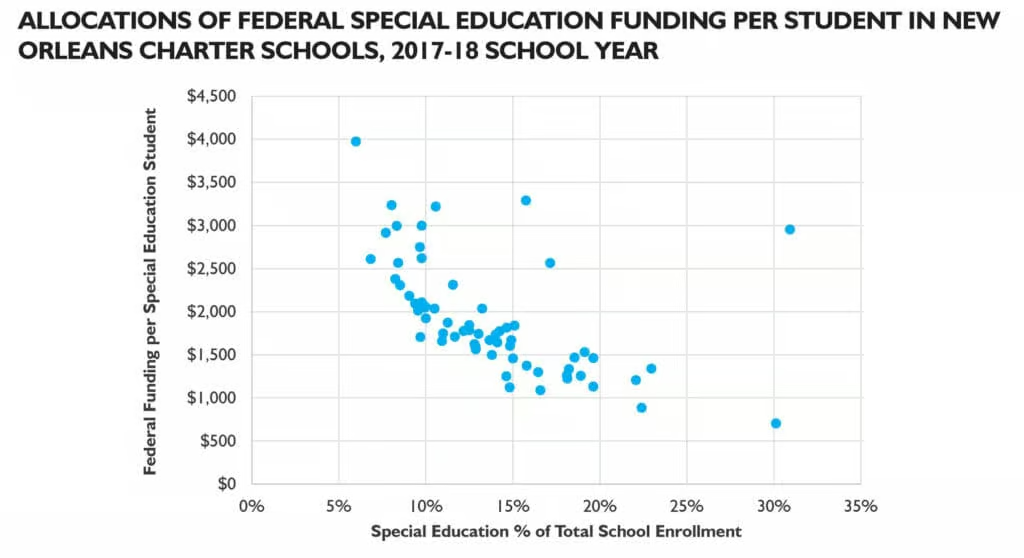
Pursuing these opportunities could improve resource allocation to schools and, in the case of Medicaid, increase schools’ funding from existing sources. To illustrate one funding concern, the chart below shows how federal grant allocation methods often provide schools with high concentrations of special education students with less funding for these students’ educational needs.
 BGR further finds that NOLA Public Schools can improve its financial stewardship of the system by:
- Strengthening its policies governing its General Fund reserves to ensure sustainability of this critical systemwide resource.
- Making its financial reporting more transparent so the community can understand how the district allocates revenue from multiple sources to core functions and programs.
- Exploring whether there are opportunities to improve the current division of school and central management functions to achieve better fiscal and practical outcomes.

 As unified local governance of New Orleans’ unique, decentralized system of public education takes root, the community is asking two critical school funding questions: What constitutes fair allocation of public dollars among independently-operated schools? And is the unified district, NOLA Public Schools, properly funding its critical central oversight and system management functions?