
The reform and modernization of local government is a lasting legacy of Hurricane Katrina. By envisioning positive change and reforming local government, residents, advocates and policymakers created a better future for Greater New Orleans. BGR is proud to have been a leader in these efforts with our independent, nonpartisan research and monitoring.
On the 20th anniversary of Hurricane Katrina, we face new challenges. Population is declining and residents are increasingly dissatisfied with public services and infrastructure. Building on the progress we’ve made over the last 20 years will require a new groundswell of ideas, leadership and persistence. BGR will support that work with data and research for informed public policy making.
BGR Needs You
Member support makes BGR’s work possible. Join us and let’s create the local government we want for Greater New Orleans.
BGR’s Roles in Notable Post-Katrina Government Reforms, 2005-2025
Expand the tiles below to read about six examples of BGR’s work in support of better local government as New Orleans recovered from the Katrina disaster.
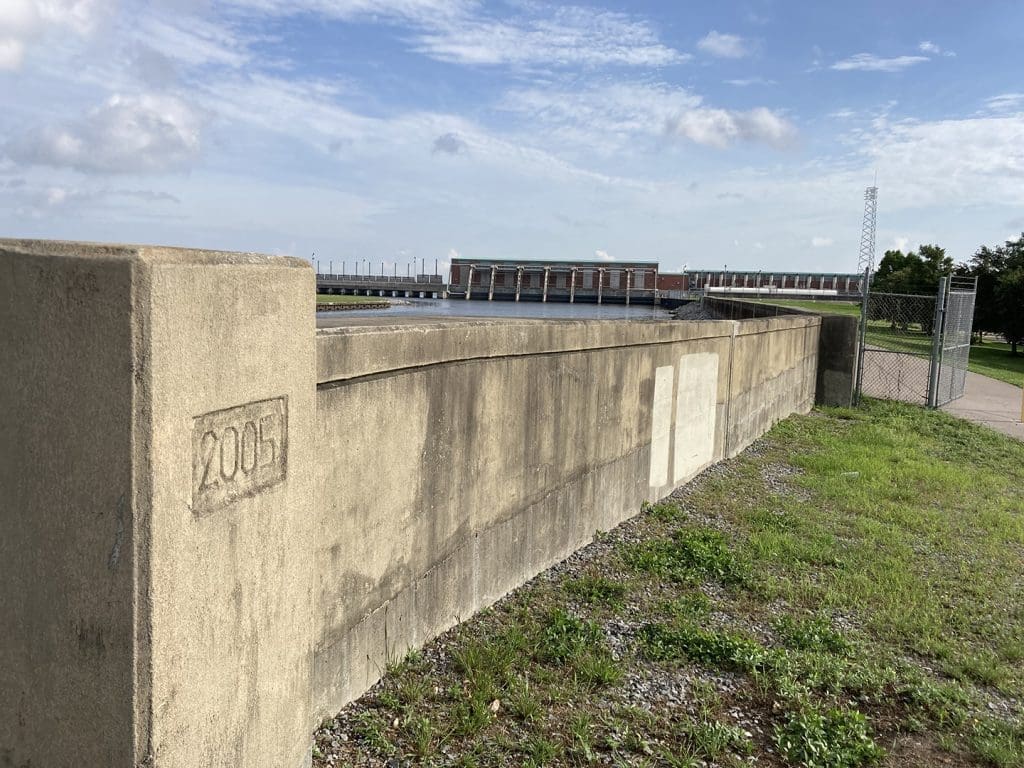
Rethinking Flood Protection Governance: Regional Levee Boards and the CPRA
With Louisiana making its case for massive federal funding to repair levee breaks, complete the protection system and restore the coast, residents and community leaders envisioned regional levee boards that are more professional and focused on flood protection, and a single coastal planning authority.
| 2006 – BGR urges a regional approach to flood protection. BGR also supports state constitutional amendments to create regional levee boards in Southeast Louisiana, as well as the statewide Coastal Protection and Restoration Authority. | |
| 2014 – Proposed state legislation threatens to undo flood protection reforms by vastly increasing the governor’s control of regional levee board appointments. BGR and others successfully oppose the bills. | |
| 2024-2025 – BGR calls on the governor and legislature to protect the core governance frameworks of the coastal authority and the regional levee boards. The legislature increases the governor’s discretion in board governance, and BGR will continue to monitor the impact. |
Seeking a Fairer System of Property Taxes
For decades before Katrina, BGR documented inequitable property assessments and their impact on governmental revenue and taxpayers in New Orleans. BGR urged reforming assessment practices and consolidating New Orleans’ unusual structure of seven elected assessors, which dated to the 19th Century, into one parishwide office.
| 2006 – In early 2006, BGR exposes uneven and arbitrary practices across the seven districts and calls for consolidation. BGR informs citizen groups engaged in that effort. Following acrimonious debate, the legislature places a constitutional amendment on the November 2006 ballot and voters approve it. | |
| 2009 – To inform voters electing the single assessor, BGR provides a blueprint for creating a fair, efficient and transparent assessment system. The assessor takes office in 2011. | |
| 2019 – BGR evaluates the single assessor’s performance and the extent to which the assessment system is better now than before consolidation. BGR finds progress in several areas, with improvement needed in property valuation practices and exemption administration. |

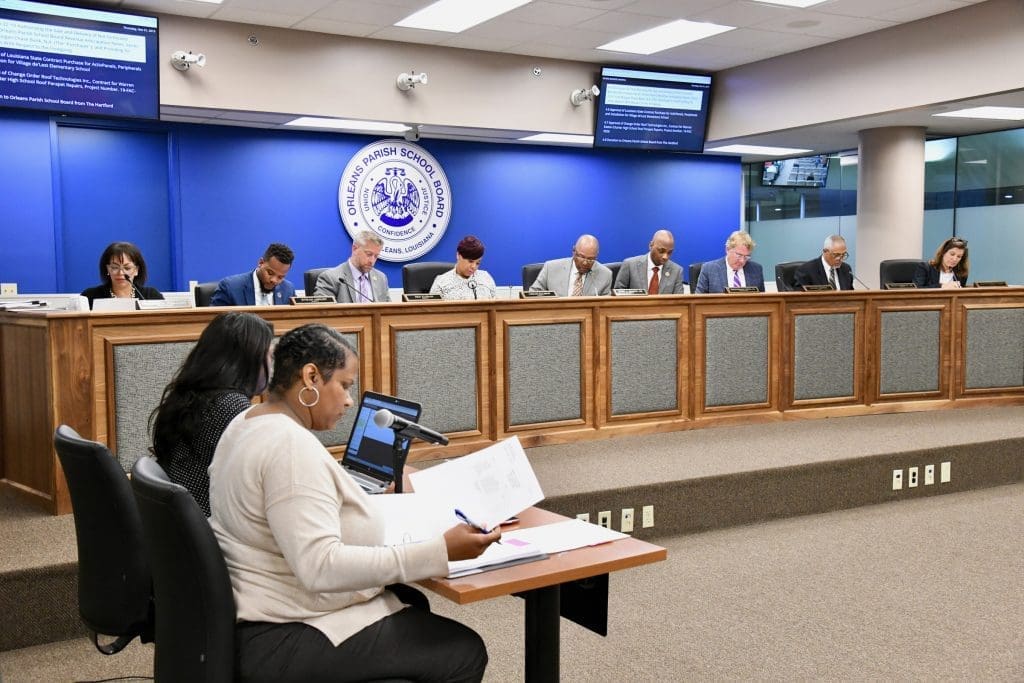
Strengthening Public School Finances
When Katrina hit, New Orleans’ public school system struggled with heavy debt, financial mismanagement and corruption. The state labeled it as a “high risk” district. The state’s post-Katrina takeover of most public schools in November 2005 and the shift to charter school operations over the next several years necessitated a new model for managing finances.
| 2013 – BGR finds that the Orleans Parish School Board has improved its fiscal health. BGR presents a framework for the School Board to strengthen its role as the financial steward for schools in the decentralized system and achieve fairer management of system resources. | |
| 2015 – The new superintendent embraces BGR’s recommendations. The School Board adopts a new policy in 2015 to protect its general financial reserves for the benefit of all schools. District officials make other changes within the central office to improve resource management and accountability. | |
| 2020 – With schools now unified again under the local district, BGR re-examines the overall funding picture. The report reviews $650 million in K-12 public education revenue and makes recommendations for improvement. The School Board adopts new policies. |
Preparing the City to Weather the Next Storm through Better Fiscal Management
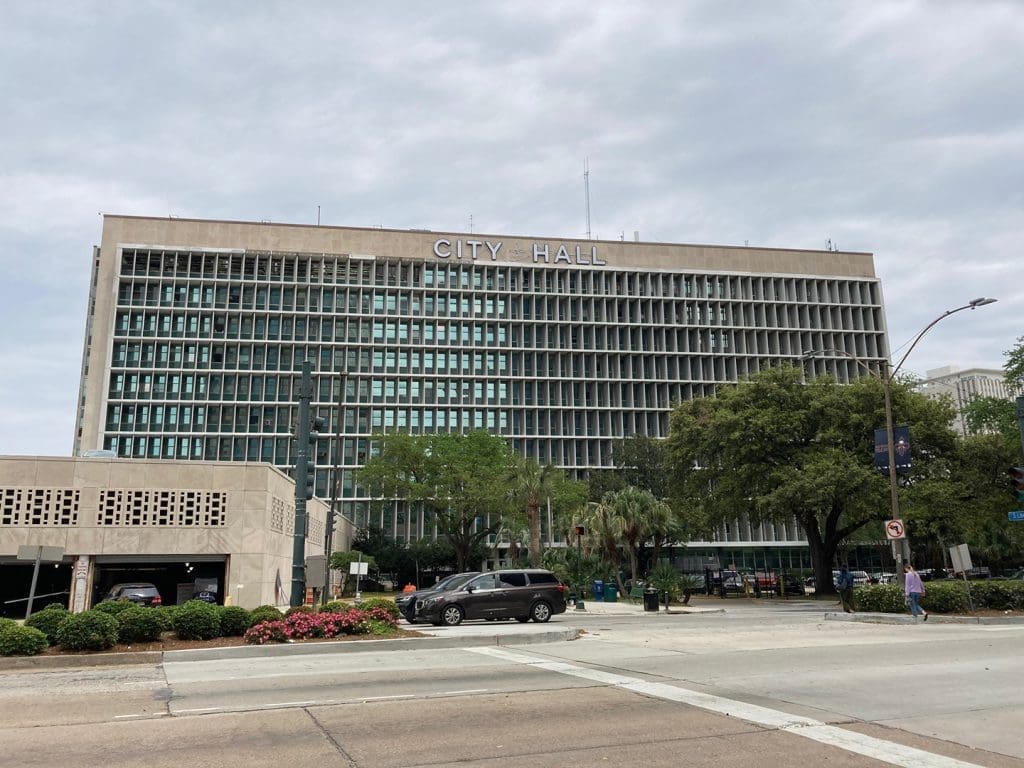
The City of New Orleans suffered a massive decline in revenue from the destruction of the Katrina disaster, which raised serious questions about its financial viability. These impacts occurred on top of a large debt load and weak financial reserves. While the City survived, it took many years to restore its finances.
| 2006 – BGR and the Public Affairs Research Council of Louisiana study the City’s financial condition, its revenue needs, and the pros and cons of pursuing municipal bankruptcy. Personnel cuts and federal loans help the City avoid that outcome. | |
| 2010 – City leaders stabilize the budget and begin rebuilding its financial reserves. They adopt several operational reforms, including improved contracting practices in 2010 based on BGR research. In 2019, BGR reviews 10 years of progress, calling for long-term financial planning, further cost savings, and reserve management. | |
| 2022-2025 – BGR finds that the City’s savings surged during the COVID-19 pandemic, but recent spending has caused them to decline again. To prevent reserves from dropping below recommended levels, BGR urges better planning and policy safeguards. |
Improving Land Use Decision Making
In 2003, BGR found that land use decisions were plagued by unclear ground rules, an unpredictable process, unbridled City Council discretion, and a lack of mechanisms for citizen participation. BGR recommended giving the city’s Master Plan the force of law for clarity and predictability and establishing a meaningful system of neighborhood participation.
| 2006 – At the urging of citizens and planners, BGR issues Planning for a New Era: Proposed Charter Changes for Land Use Decision Making in New Orleans. The report lays the foundation for a citizen-driven amendment process. | |
| 2008 – Voters approve a 2008 charter amendment, placed on the ballot with unanimous City Council approval, that follows the central elements of BGR’s proposal. It requires land use laws and actions to conform to the City’s forthcoming Master Plan (the “force of law”) and mandates that the City create a system for neighborhood participation. | |
| 2009-2014 – In 2009, BGR and others successfully oppose state legislation to require a public vote on the Master Plan. BGR also provides citizens with analysis of draft plans in 2009 and 2010, the neighborhood participation process in 2009 and 2012, and the new zoning ordinance in 2011, 2014 and 2014. |

Retooling the Justice System: Right-Sizing Judgeships, Improving Jail Governance
The justice system in Orleans Parish in 2005 operated with outmoded facilities and an adult jail population of more than 6,500. Federal jail oversight had entered its fourth decade. Justice system actors, community groups and citizens began working post-Katrina to reduce the jail population and improve the system.
| 2013 – In 2013, BGR advances the effort to right-size Orleans Parish courts in light of declining case filings and population. We help lay the groundwork for the future elimination of two unnecessary juvenile court judgeships and one judge for the municipal and traffic courts, which also merge as an efficiency measure. | |
| 2022-2025 – In 2022, BGR analyzes the problematic relationship between the Orleans Parish Sheriff, who runs the jail, and the City of New Orleans, which provides most of its funding. The report makes recommendations to help the Sheriff and the City develop a stronger relationship and deal with problems that have persisted for decades. As the jail’s struggles continue, punctuated by the May 16, 2025, escape of 10 men from custody, BGR calls on the Sheriff and City to face chronic problems plaguing the jail and develop a joint strategy for a safe, secure and high-performing jail. |

These are also presented in our brief publication, “Responding to the Call,” which you can read or download in the box below. Swipe through the PDF to read. Or click the three dots at the bottom of the box, or this link to download the document.