
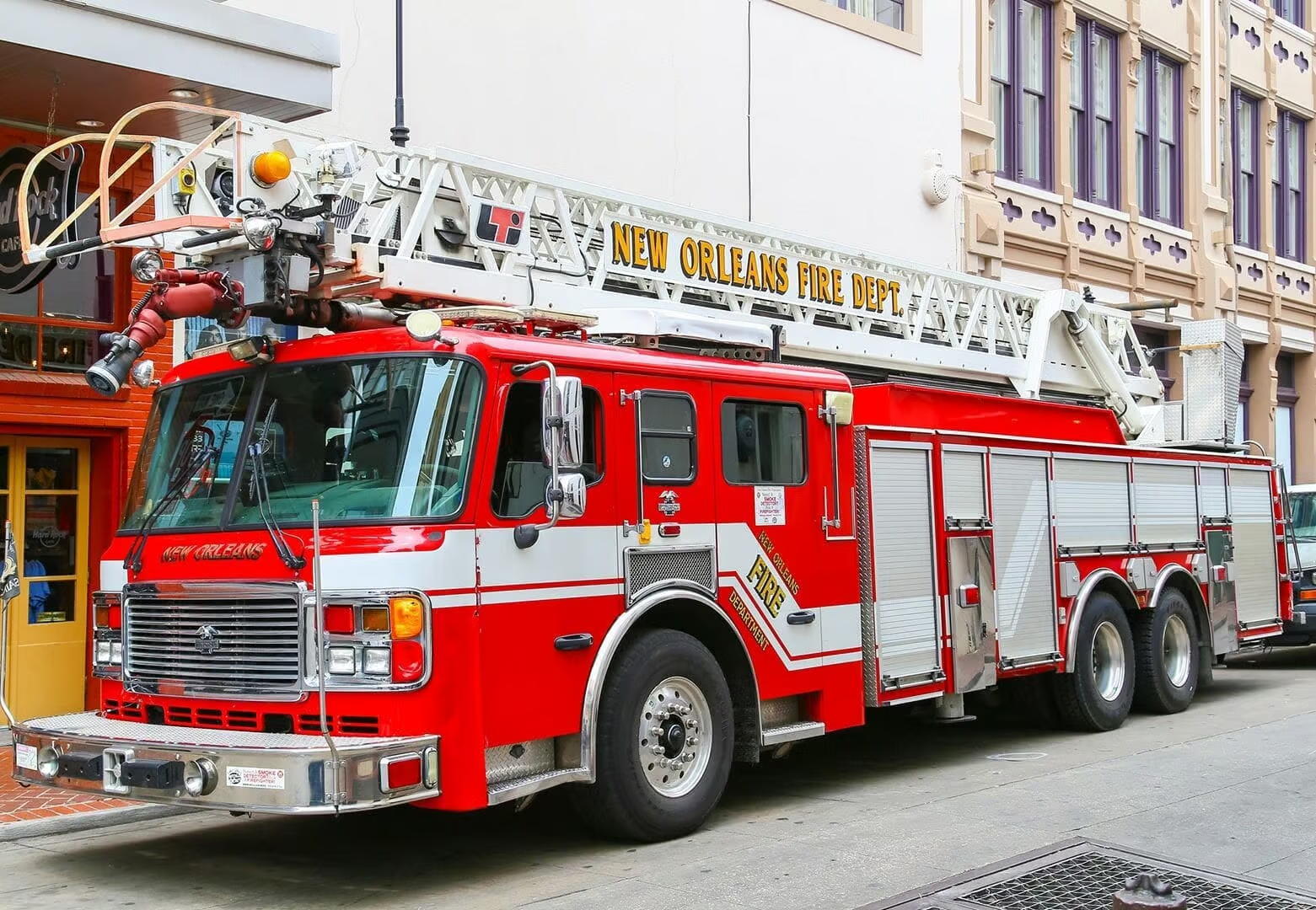
New Orleans firefighter pension controversy is back eight years after landmark settlement
By Ben Myers
Source: The Times-Picayune | Nola.com
May 11, 2024
Eight years after a landmark legal settlement quelled a bitter public feud between New Orleans firefighters and City Hall, a controversy is stirring again over the city’s woefully underfunded fire pension.
Unlike the 2016 spectacle, in which former Mayor Mitch Landrieu was held in contempt of court and nearly placed on house arrest, the firefighters and Mayor LaToya Cantrell’s administration are now finding common cause.
In March, they quietly moved to undo benefit cuts that were aimed at shoring up the New Orleans Firefighters’ Pension and Relief Fund.
The fund, which remains one of the worst funded pensions in the country, nearly went bust during Landrieu’s second term. After years of bad investments and City Hall’s failure to make required contributions, the amount in the fund had dipped to a little more than $40 million, a small fraction of what was needed to cover future payouts. Landrieu championed a settlement that resolved long-standing disputes over retirement benefits and back pay.
Although the pension fund is far from solvent, firefighters now say the settlement was a bad deal and that the cuts intended to make it financially sound are causing a staffing shortage.
Cantrell, the firefighters union and the board overseeing the pension and its investments amended the settlement agreement earlier this year without telling the City Council or the public.
The new terms allow the legislature to restore benefits that had been in place a decade ago, and two bills sponsored by state Rep. Mandie Landry, D-New Orleans, would have done just that, while also increasing minimum monthly pension payments from $1,200 to $1,500.
Landry tabled those bills last month, citing uncertain support and questions as to whether the City Council needs to approve. The firefighter union is already lobbying council members in an effort to reintroduce bills for next year’s legislative session.
In a recent report and interview, BGR officials warned of potentially disastrous consequences of a redrawn settlement. The city currently pays out more than $50 million each year to cover the pension’s future liability — which is about 6% of the city’s general fund — but BGR is worried that restoring benefits could cost taxpayers millions more per year.
BGR Executive Director Rebecca Mowbray said it was also a bad precedent for the mayor to make changes to agreements with long-lasting effects without telling the public.
“The public was completely unaware of this,” Mowbray said. “You’ve potentially got the legislature making some decisions that have direct financial implications for the city, and there’s been no local discussion, no assessment of what it would cost the city.”
Vote coming?
Some of the other players involved are saying little publicly. Cantrell’s office didn’t respond to questions. Nor did the fire pension board.
City Council member Joe Giarrusso, chairman of the council’s budget committee, said members didn’t find out about the settlement amendment and legislation until after the fact. He declined further comment, except to say the Cantrell administration “has to answer those questions.”
The New Orleans Firefighters Association, however, is pushing back hard against the BGR report, which was issued April 24. President Aaron Mischler called it “egregious and rife with misinformation.” Mischler also said he’s met with five council members who support the effort to increase firefighter benefits, though he declined to identify them. He said he expects a council vote within the next month or so.
“They don’t have a problem with it. They understand the issues that the department is having,” Mischler said.
Council member Eugene Green confirmed he met with Mischler and supports restoring benefits. Other council members did not respond or declined to comment.
Sticking point
The New Orleans Fire Department currently has about 640 firefighters, and a key sticking point between BGR and the union is how the 2016 benefit reductions are impacting staffing.
BGR says fire officials haven’t produced clear evidence to show any negative effect on recruitment and retention. The Fire Department provided BGR with data showing about 10 resignations per year since 2016, similar to the year before the settlement. Mischler said BGR ignored a longer trendline showing resignations occurred only once every few years in the previous two decades.
Mischler said the department is wasting money training new firefighters who leave within a few years for jobs with better retirement benefits. He also said that fewer pension contributions from experienced, higher-salaried employees is hurting the fund.
“We understand the difficulties that we have in recruiting and retaining the people that we’re spending loads of money to train,” Mischler said. “We lose them within four to five years to other departments, or other job opportunities.”
BGR said a proper compensation study is needed to understand how pension benefits impact the department’s hiring and retention. And while Mischler says the department needs 700 firefighters to meet National Fire Protection Association standards, BGR questioned whether modern construction standards and other factors have made the city less fire prone.
“Is there a recruitment and retention problem? We don’t know. And even if they were losing some firefighters, what’s the right size of the force? We don’t know,” Mowbray said. “We think it’s something the city should seek to answer.”
Worst in the country
Despite eight years of reduced benefits and better investment practices, the pension fund holds enough assets to cover just 11.5% of its liabilities, which is the lowest funding ratio among 216 public pensions tracked by the Center for Retirement Research at Boston College. The funding ratio is only slightly better than it was before the 2016 settlement, which called for keeping benefit reductions in place until the pension is 80% funded.
State law requires the city to cover whatever obligations the fund can’t pay, as determined by an actuary, though it has rarely done so.
Last year, for example, the city’s $51 million in fire pension contributions was still more than $7 million short of what the city was required to pay. The contribution was also more than the entire department’s annual payroll.
BGR is worried that increasing retirement benefits will bleed the general fund even more, though it says a study is needed to estimate the impact.
An actuary employed by the pension fund — who has since been replaced — estimated the benefit increases would cost the city an extra $1 million per year, but a separate audit found problems with that calculation and the Louisiana Legislative Auditor said the real amount could be significantly higher.
“It would be financially irresponsible to commit to major pension benefit increases without careful estimates of the long-term costs,” the BGR report said.
History of underfunding
The city’s recent underfunding of the fire pension pales in comparison to the years before the 2016 settlement, when the city underpaid by $100 million over six years, according to pension audit reports. The Landrieu administration pointed to years of mismanagement and terrible investment decisions as cause for the ballooning liability.
At the same time, the city was continuing to stiff the firefighters on court-ordered back pay stretching back decades. Landrieu wouldn’t pay the $142 million owed, including interest, until both disputes were settled — even after a Civil District Court judge held him in contempt and ordered him to be placed on house arrest.
Landrieu and the firefighters eventually settled the back pay and pension dispute. As part of the deal, the retirement age was increased from 52 to 57 for new recruits and other changes were made that reduced future funding needs. Landrieu avoided house arrest and the controversy faded from view.
But the settlement didn’t assuage hard feelings on the part of the firefighters. Mischler said in-service firefighters voted against the settlement, which passed with support from retirees who wanted their back pay.
“Everybody’s smiling and shaking hands,” Mischler said. “Your groundbreaking achievement is screwing the firefighters.”
Fair Use Notice
This site occasionally reprints copyrighted material, the use of which has not always been specifically authorized by the copyright owner. We make such material available in our efforts to advance understanding of issues and to highlight the accomplishments of our affiliates. We believe this constitutes a “fair use” of any such copyrighted material as provided for in section 107 of the US Copyright Law. In accordance with Title 17 U.S.C. Section 107, the material on this site is available without profit. For more information go to: US CODE: Title 17,107. Limitations on exclusive rights: Fair use. If you wish to use copyrighted material from this site for purposes of your own that go beyond “fair use,” you must obtain permission from the copyright owner.