

New Orleans City Council advances Omni hotel project, signals approval on tax break
By Jasmine Robinson
Source: Verite News
June 25, 2026
The New Orleans City Council on Wednesday (June 24) gave preliminary approval to a zoning change that will allow a planned headquarters hotel for the Ernest N. Morial Convention Center to move forward.
The city will now draft a zoning ordinance that would create an overlay district at the site of the planned $600 million Omni hotel, which would allow it to bypass building height regulations in the Central Business District, among other regulations. The council will have to take another vote on the ordinance for it to take legal effect.
Officials with the Convention Center, a state entity, have spearheaded the development of the hotel. They say the zoning change is necessary to accommodate the 1,000 rooms planned for the hotel. The hotel is planned for a small parcel of land in between Convention Center Boulevard and South Peters Street, next to Mississippi Heritage Park, where The Sugar Mill currently stands.
Wednesday’s vote cleared a major hurdle for developers. But they are still seeking approvals, from both the state and the city, for a package of tax incentives, worth hundreds of millions of dollars over 45 years, that will subsidize the hotel’s operations. The scope of the proposed subsidies have drawn criticism from some state officials, workers in the city’s hospitality industry and the watchdog group the Bureau of Governmental Research.
Despite that growing opposition, the Omni project got the go-ahead from the council without any dissent from its members on Wednesday. Councilmembers said their support was the result of recent behind-the-scenes negotiations on one of the tax incentives — a payment-in-lieu-of-taxes deal, or PILOT — that they said resulted in more benefits to taxpayers than what was originally proposed. A PILOT would allow Omni to avoid local property taxes on the hotel, instead making an annual payment to the city and other tax collection agencies.
Under the newly proposed PILOT terms, Councilmember Lesli Harris said, the hotel will commit to provide 500 permanent jobs and award a portion of hotel construction work to local and minority-owned firms.
Though the council meeting’s agenda item only addressed the zoning change, discussion at the meeting turned into a forum for people to voice their minds on the controversial project as a whole.
Officials have emphasized the importance of this hotel to help New Orleans be competitive for attracting conventions and large events while also providing an overall boost to tourism for the city.
“The reason we are working so hard for this hotel is that we are fighting against competition from other cities who are continuing to grow the amount of hotel inventory they have and the amount of headquarter hotels immediately surrounding their convention centers,” Convention Center President and CEO Jim Cook said.
Opposition to the project thus far has been led in part by local hospitality workers who are critical of the purported benefits to New Orleans’ hospitality industry and workforce.
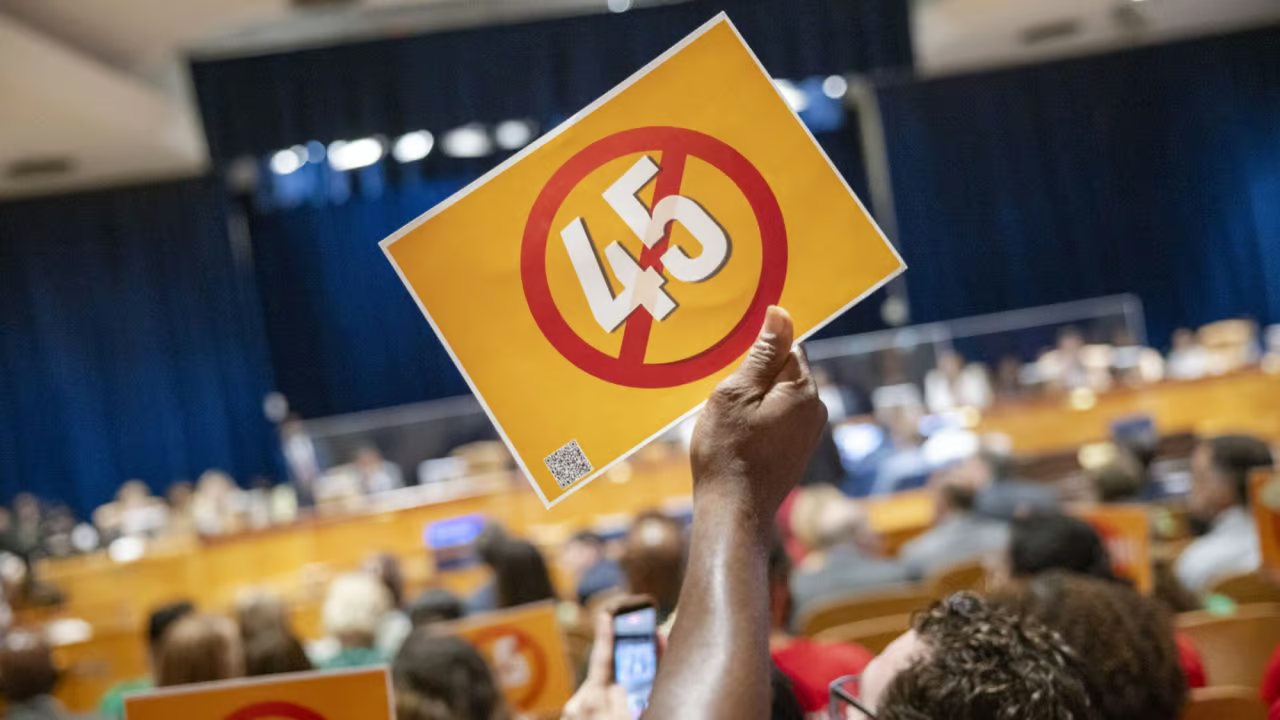
Inside the packed council chambers, over 40 people spoke during the 90-minute public comment period. People in opposition to the project — mostly hospitality workers and local organizers clad in red t-shirts — were spirited throughout the meeting, cheering for speakers they agreed with and jeering others in between being quieted by councilmembers.
Meanwhile, hotel supporters wore green clothing. Those who spoke up in defense of the project were almost entirely composed of local tourism and hospitality stakeholders, people affiliated with Omni or present in a work capacity.
The green and red divide painted a picture of the polarizing nature of the Omni project.
Some comments in opposition were made by residents of the Warehouse District, where the site is located. One resident, a member of the Warehouse District Neighborhood Association, raised concerns about water usage by the hotel impacting neighbors.
Another resident, Jonathan Hill, said that he sold his condo on South Peters Street and moved Uptown to avoid future disruptions caused by the hotel.
“The Omni project is going to be a disaster for all those living in the Warehouse District,” Hill said after the meeting.
Most comments addressed the implications of Omni’s proposed tax incentives.
The $600 million hotel could receive incentives that net it nearly $700 million over the course of 45 years. The estimated gross public investment in subsidies is nearly $1 billion, according to a report by the Bureau of Governmental Research.
“No one invests in the people of New Orleans, just its tourists, its utility company, executives, its wealthy, its police — and the people of New Orleans know that we’re not invested in. We feel it in the roads and the healthcare system, and we deserve better,” said Kendall Barry, a member of the Louisiana Party for Socialism and Liberation.
Proponents offered an opposing argument: that some money would still be paid by Omni in property taxes with a PILOT — though likely less than without a PILOT — which is money the city would miss out on without the hotel. Speakers reiterated that the city isn’t dipping into its budget for the project, only the state.
Walt Leger III, president and CEO of New Orleans & Co., said the hotel would help grow the city’s tax base by generating “multiple millions” in property taxes yearly.
“These are precisely the types of investments that our community needs to be able to address a multi-hundred-million-dollar deficit that exists” in the city’s budget, Leger said.
The youngest speaker was 11-year-old Winsor Cavalier, who was concerned how the tax break might impact funding for public schools.
“The City Council should show us the full picture, including a tax plan, before approving this project. Saying yes to this sets a dangerous precedent of saying yes to corporations before knowing the long term consequences,” Cavalier said to a roar of applause.
The topic of school board taxes was revisited when council president JP Morrell berated Mike Sherman, Omni’s land use consultant, following Sherman’s comments touting how the Orleans Parish School Board’s property tax collections would not be affected by the proposed PILOT deal.
Morrell’s response hinted at some dysfunction in negotiations.
“It has not been a pleasure working with you. … you and the people you represent did not want to pay school board property taxes. While you sit up here and pat yourself on the back, there’s work being done to make sure this city is treated properly in this transaction, and you were not a part of it,” Morrell said.
PILOT agreement
The vote on zoning changes came several hours after the city council meeting’s 10 a.m. start. They delayed voting on the motion until after an afternoon meeting by commissioners with the taxing district created for the site of the hotel. Convention Center officials formerly introduced the PILOT term sheet at that meeting.
The PILOT would last 45 years, with regular payments Cook estimates will amount to “several million” dollars per year.
Cook said Omni has committed $550 million in private investments to pay for the hotel.
“The purpose of these incentives is to simply help them achieve the return on investment.” Cook said at the council meeting.
Omni will pay the full property tax bill for the school board and Regional Transit Authority. For other taxable entities Omni would pay the average rate of the five highest hotels in its competitive set.
Per the agreement, Omni will maintain a minimum of 500 full time equivalent employees. If they don’t maintain this, then the PILOT will be forfeited in that specific tax period. There are no stipulations on wages or making union jobs available.
Luke Nogueira, a member of the Revolutionary Communists of America organization, told commissioners at the afternoon meeting that although he supports economic development, he doesn’t like that it’s catered toward having a competitive edge over other cities.
“We have a competitive edge over other cities. We are New Orleans. What we don’t have is working infrastructure. What we do have is a $220 million deficit in our budget. So let’s build this hotel, tax it, use that money to make the rest of our city better so more and more people come visit, stay in your hotel and give you profits that you so desperately want,” Nogueira said.
The PILOT deal still has a journey before getting approved — it will first be reviewed by the city Office of Economic Development, then voted on by the city council, and if passed, will need final approval from the Convention Center’s economic development district board.
Fair Use Notice
This site occasionally reprints copyrighted material, the use of which has not always been specifically authorized by the copyright owner. We make such material available in our efforts to advance understanding of issues and to highlight the accomplishments of our affiliates. We believe this constitutes a “fair use” of any such copyrighted material as provided for in section 107 of the US Copyright Law. In accordance with Title 17 U.S.C. Section 107, the material on this site is available without profit. For more information go to: US CODE: Title 17,107. Limitations on exclusive rights: Fair use. If you wish to use copyrighted material from this site for purposes of your own that go beyond “fair use,” you must obtain permission from the copyright owner.