

BGR Briefing Examines Post-Katrina Reforms, Future Civic Engagement
By Site Staff
Source: Biz New Orleans
June 24., 2025
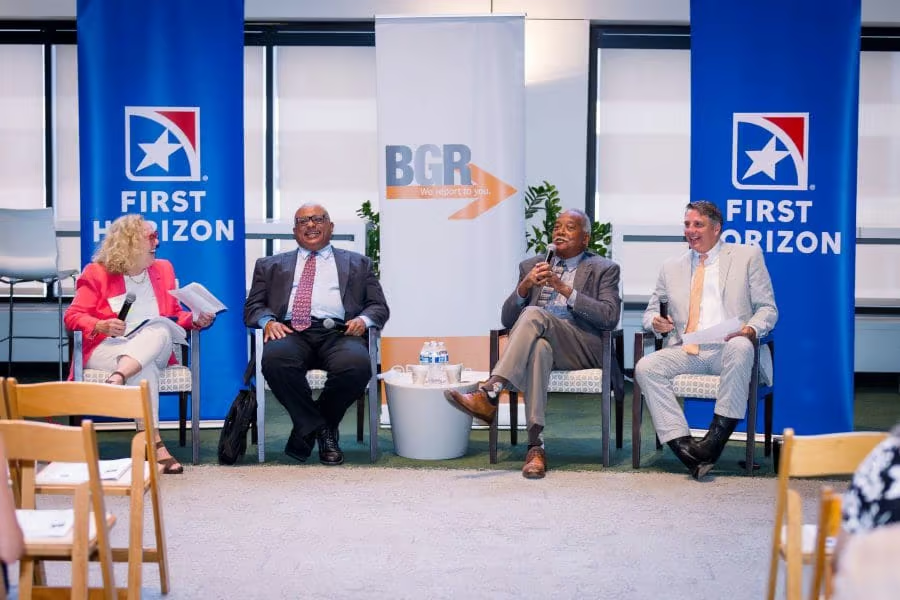
NEW ORLEANS (press release) – Twenty years after Hurricane Katrina reshaped New Orleans, a panel of civic leaders and experts gathered at the Bureau of Governmental Research (BGR) June 18 Breakfast Briefing to reflect on the government reforms that followed the disaster and the challenges that remain.
The panelists —Judge Calvin Johnson, Dr. Robert Collins, and Andy Kopplin — discussed the progress spurred by the disaster, including policing and public school improvements. They also dove into the challenges that remain, such as the Sewerage and Water Board’s struggles, voter disengagement, and stalled efforts to consolidate Orleans Parish’s civil and criminal courts.
Ways to Catch Up on BGR Event
If you missed this informative event, there are two ways to catch up:
- Listen to the rebroadcast on June 24 at 10:00 a.m. and 10:00 p.m. on WWNO 89.9 FM New Orleans Public Radio. Stream it online at: https://www.wwno.org/.
- Click the following link to watch the full video replay on BGR’s website: https://www.bgr.org/june-18-breakfast-briefing-focuses-on-post-katrina-government-reforms-and-future-citizen-engagement/.
In connection with the event, BGR published highlights of its work in support of better local government post-Katrina. BGR also compiled this working list of post-Katrina government reforms to facilitate the discussion.
Local Government Reform
Retired Former Chief Judge of Orleans Parish Criminal District Court Calvin Johnson, Dillard University Professor of Urban Studies and Public Policy Robert Collins, and Greater New Orleans Foundation President and CEO Andy Kopplin joined BGR President and CEO Rebecca Mowbray for a wide-ranging conversation on the legacy of local government reform and the role of civic engagement in driving progress.
Watch the Highlights
Collins notes that many college students leave New Orleans after graduation in search of better job opportunities. Kopplin stresses the need for economic growth, better city services, and targeted investments that give residents more reason—and ability—to stay. (57:29 – 1:03:10)
Johnson reflects on how far the city has come since Hurricane Katrina saying, “We forget how much good we have done.” (12:43 – 13:17)
Kopplin talks about how civic associations, nonprofits, and everyday citizens helped drive reform in the aftermath of the storm, creating new engagement with local government. (13:18 – 13:54)
Johnson points to a sharp drop in the jail population and improvements in policing as signs of real progress in public safety. Kopplin highlights gains in student achievement and graduation rates in the public school system—while also acknowledging the toll those changes took on educators and families. (15:33 – 18:19)
Collins shares that internal drainage and the Sewerage & Water Board remain major frustrations for residents. Kopplin adds that while there’s been some progress, deeper issues with governance and funding continue to hold the system back. (19:37 – 23:14)
Johnson revisits the failed effort to merge civil and criminal courts, expressing disappointment that it didn’t move forward. Kopplin brings up BGR’s 2013 report on the high number of judges in New Orleans and the cost of maintaining separate court systems. (23:25 – 27:39)
Collins highlights a steady decline in voter turnout since Katrina and attributes it to political disengagement and lack of trust. He calls for renewed efforts to engage voters—especially young people—through social media, schools, and community organizations. (32:49 – 43:35)
Fair Use Notice
This site occasionally reprints copyrighted material, the use of which has not always been specifically authorized by the copyright owner. We make such material available in our efforts to advance understanding of issues and to highlight the accomplishments of our affiliates. We believe this constitutes a “fair use” of any such copyrighted material as provided for in section 107 of the US Copyright Law. In accordance with Title 17 U.S.C. Section 107, the material on this site is available without profit. For more information go to: US CODE: Title 17,107. Limitations on exclusive rights: Fair use. If you wish to use copyrighted material from this site for purposes of your own that go beyond “fair use,” you must obtain permission from the copyright owner.