

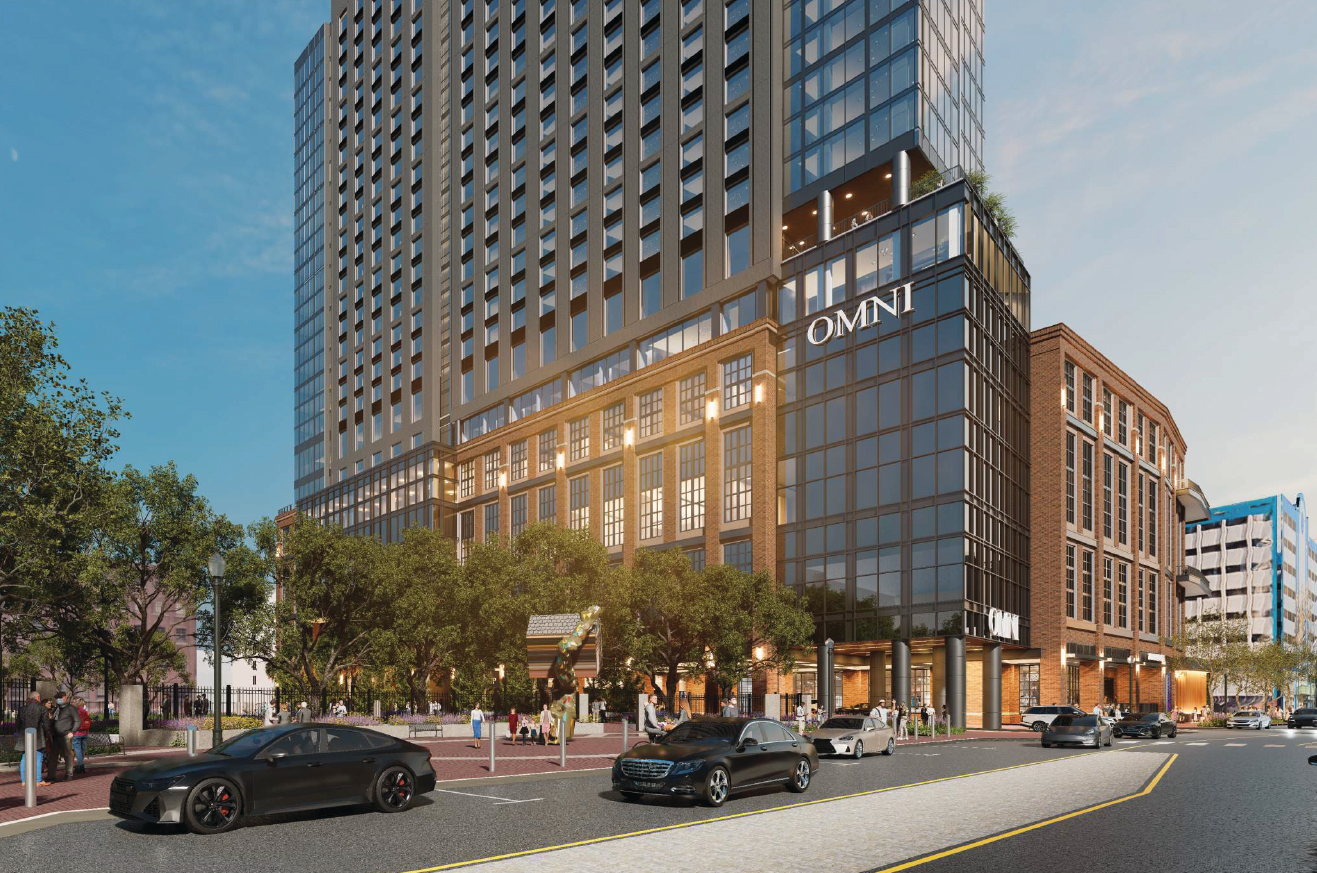
As Omni project advances, hospitality workers express doubts
By Jasmine Robinson
Source: Verite News
June 3, 2026
The Ernest N. Morial Convention Center in New Orleans is working on securing hundreds of millions of dollars in tax incentives for its incoming headquarters hotel — a new Omni hotel worth $600 million.
Officials say the hotel is key to the long term success of tourism in New Orleans and could strengthen the hospitality community. They also hope it will improve competitiveness in the convention industry and bring larger events to the city.
Recently, Convention Center officials hit a snag in getting approval on a major tax incentive for the hotel. They are seeking state approval for a tax rebate plan worth an estimated $265 million over 45 years. Under the plan, the state would send certain sales taxes generated from the Omni to the developers, subsidizing the hotel’s operations.
But the size of the proposed public subsidy has reportedly created “angst” among state legislators with the Joint Legislative Committee on the Budget. On Sunday (May 31) the committee deferred a vote on the rebate, the second such deferral since April.
Concerns from the state legislature echo criticisms coming from local hospitality workers, whose labor would support a boost in tourism. Unionized hospitality workers have been at the forefront of opposing the publicly subsidized hotel and are part of a labor coalition demanding guaranteed benefits to taxpayers.
“I think it’s disrespectful and a slap in the face to not only just the hospitality workers, but as a whole to the workers here in the state or the city,” said Monicka Bolling, a banquet captain at the Convention Center.
Expected to open in 2030, the new Omni hotel would be the fifth largest hotel in New Orleans with about 1,000 rooms. A hotel of this size hasn’t been built in the city in more than 40 years.
The hotel is critical for the city’s bid to host the Super Bowl in 2031. According to Fox 8, the NFL told officials that if New Orleans wants to host the game, “it needs new hotels like the Omni.”
“This is a project born of a strategic competitive need, and not born out of just a willingness for a shiny new hotel. This is about us continuing to remain competitive against cities who have continued to build at a rate far faster than we have,” Convention Center president and CEO Jim Cook said during the center’s May 13 board of commissioners meeting.
In a statement Cook said the Omni is projected to have an annual economic impact of $213.6 million by the fourth year of operation and generate over $15.2 million in new taxes for the city and state.
But generating that kind of impact is going to cost taxpayers. A 2025 report by the Bureau of Governmental Research estimated the gross public investment in the project will be over $940 million in the span of 45 years. The hotel will net about $669 million in public subsidies after rent payments to the Convention Center, which is a state entity.
Along with the state tax rebates, the hotel is also seeking a heavy discount on local property taxes, through a payment-in-lieu-of-taxes deal, or a PILOT, that would allow Omni to skip regular property taxes in place of smaller, annual payments. The PILOT, like the sales tax rebates, would last 45 years and could be worth hundreds of millions of dollars. There’s no publicly known timeline for the public review process or City Council approval of the deal.
Officials have said the public-private nature of the project will make the hotel financially feasible.
“The [45-year] term is necessary to meet the return that enables the developer to invest over $550 million in capital necessary to build this hotel without more of a direct public contribution,” Cook said.
But BGR found in its report that Omni will only need the subsidies to reach its profit target for 11 years. By the 12th year, subsidies wouldn’t be necessary.
Impact to the hospitality industry
For some hospitality workers in New Orleans, the prospect of their tax dollars subsidizing the Omni hotel project is discomforting. Rising costs of living have made things dire for workers in the tourism industry, who historically have earned low wages.
It’s common for workers in the hospitality and service industry to work multiple jobs, said Bunny White, who’s been working at the Caesar’s Superdome for nine years as a cashier.
Three years ago, White was 65 years old working four jobs at once to support herself. She was working one of her jobs when she had a stroke. The moment was a wakeup call for her.
“A lot of people are suffering. This economy is devastating to a lot of families.” White said.
Bolling works as a banquet captain at the Convention Center. She has two adult sons who work in hospitality, including one who also works at the Convention Center. Due to rising costs of living, low pay in the hospitality industry and inconsistent work, she said they had to move back home with her.
“If you’re not working consistently …folks cannot afford to just live on their own,” Bolling said. Work in hospitality is inconsistent — marked by up and down seasons, she added.
White and Bolling, both members of the UNITE HERE Local 23 hospitality workers union, expressed concern that businesses across the industry are understaffed and workers underpaid because business hasn’t fully rebounded from the COVID-19 pandemic.
“You have hotels here that you cannot supply the workers for, that you won’t hire people for because you’re trying to keep your numbers down to benefit your pocket,” White said.
Officials are expecting the Omni to bring 1,400 new permanent jobs. But Bolling said that job creation alone isn’t enough to support a workforce that is critical to a growing tourism economy.
“People need to be adequately paid to be in these spaces and they still have not proven or said how this will be beneficial. … [You] say you’re going to have X amount of jobs, but how much are you paying these people? We don’t know enough yet,” Bolling said.
While the addition of new jobs would theoretically alleviate labor shortages in the industry, it’s a factor that could exacerbate labor shortages at individual hotels.
“With a brand new shiny hotel opening up, I think the labor force will shift towards that new hotel. So you could experience a labor shortage at some older, smaller properties,” said Chantal Wu, senior director of hospitality marketing analytics with CoStar.
White and Bolling say they fear a new hotel could draw business away from existing hotels, which would leave less available work at those hotels. Or, it could also lead to workers being overworked while underpaid.
In New Orleans, hotel occupancy averaged 69% from 2015 through 2019, according to data from CoStar. Post-pandemic, occupancy averaged 60% from 2022 to 2025. That’s in line with what’s happening nationally.
According to Wu, the hotel industry has not fully recovered since the pandemic. She said it’s partially because lower income households are deprioritizing travel. Meanwhile, she says affluent travelers are spending big and rates charged at hotels are accelerating. And hotel owners are taking notice.
“Basically, hoteliers are trading volume for more pricing power.” Wu said.
In New Orleans, Convention Center officials say the addition of the hotel would impact nearby existing hotels by increasing demand for rooms and increasing rates. An analysis by HVS Consultants, which did consulting for the Convention Center’s headquarters hotel, said that the addition of a new hotel wouldn’t bear much impact on occupancy levels, but presents opportunities for rate growth and higher revenue.
Recent developments with the Omni
Convention Center officials still must obtain zoning approvals to begin construction in late 2026.
In May, the City Planning Commission approved the sale of public land to accommodate design plans for the hotel. The commission authorized the sale of one block of John Churchill Chase Street and a small portion of Mississippi Heritage Park to hotel developers.
The economic development district overseeing the hotel’s development, whose members are the Convention Center’s board of commissioners, approved in May an additional 2% in sales and hotel taxes at the site of the hotel. The Bureau of Governmental Research estimates it will generate $127 million in revenue for the Omni.
The hotel is planned at the site of The Sugar Mill in between Convention Center Boulevard and South Peters Street, next to Mississippi Heritage Park.
Later this month, the New Orleans City Council is expected to vote on proposed changes to the city zoning ordinance which would remove building height regulations for the hotel. The City Planning Commission recommended approval for the changes.
“The way the city council votes is going to also show who they really are siding with, who they really care about — whether it’s the residents of the city or if it’s developers,” Bolling said.
Fair Use Notice
This site occasionally reprints copyrighted material, the use of which has not always been specifically authorized by the copyright owner. We make such material available in our efforts to advance understanding of issues and to highlight the accomplishments of our affiliates. We believe this constitutes a “fair use” of any such copyrighted material as provided for in section 107 of the US Copyright Law. In accordance with Title 17 U.S.C. Section 107, the material on this site is available without profit. For more information go to: US CODE: Title 17,107. Limitations on exclusive rights: Fair use. If you wish to use copyrighted material from this site for purposes of your own that go beyond “fair use,” you must obtain permission from the copyright owner.