
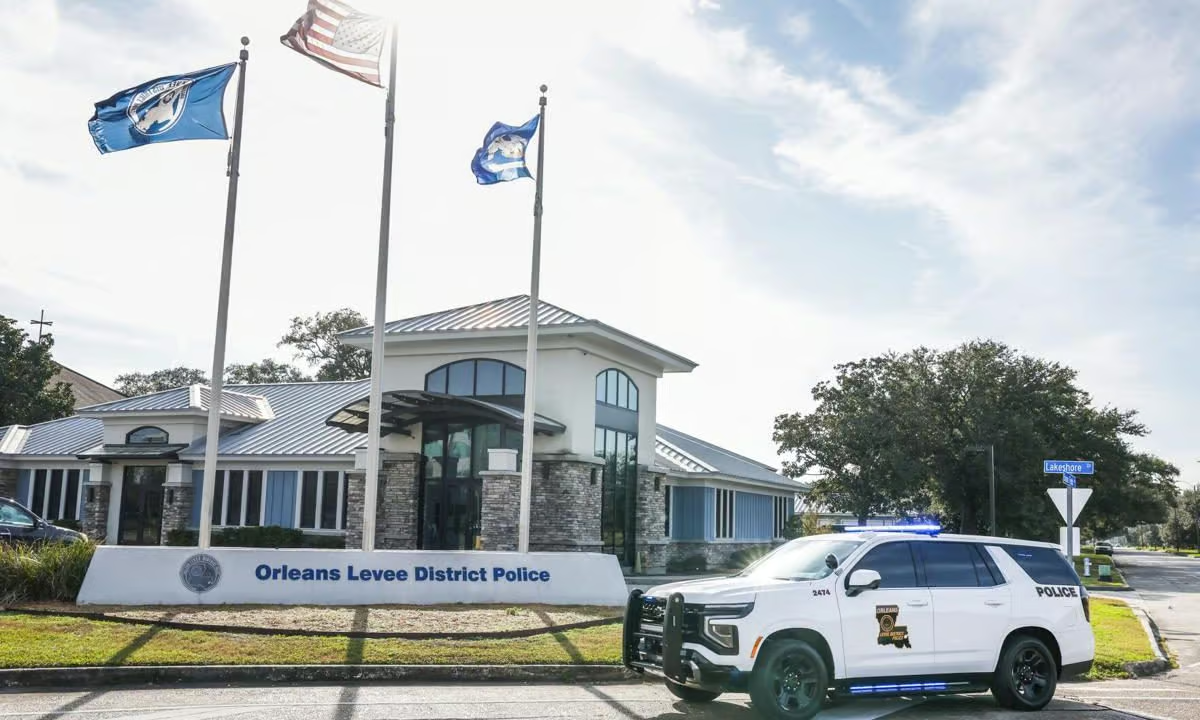
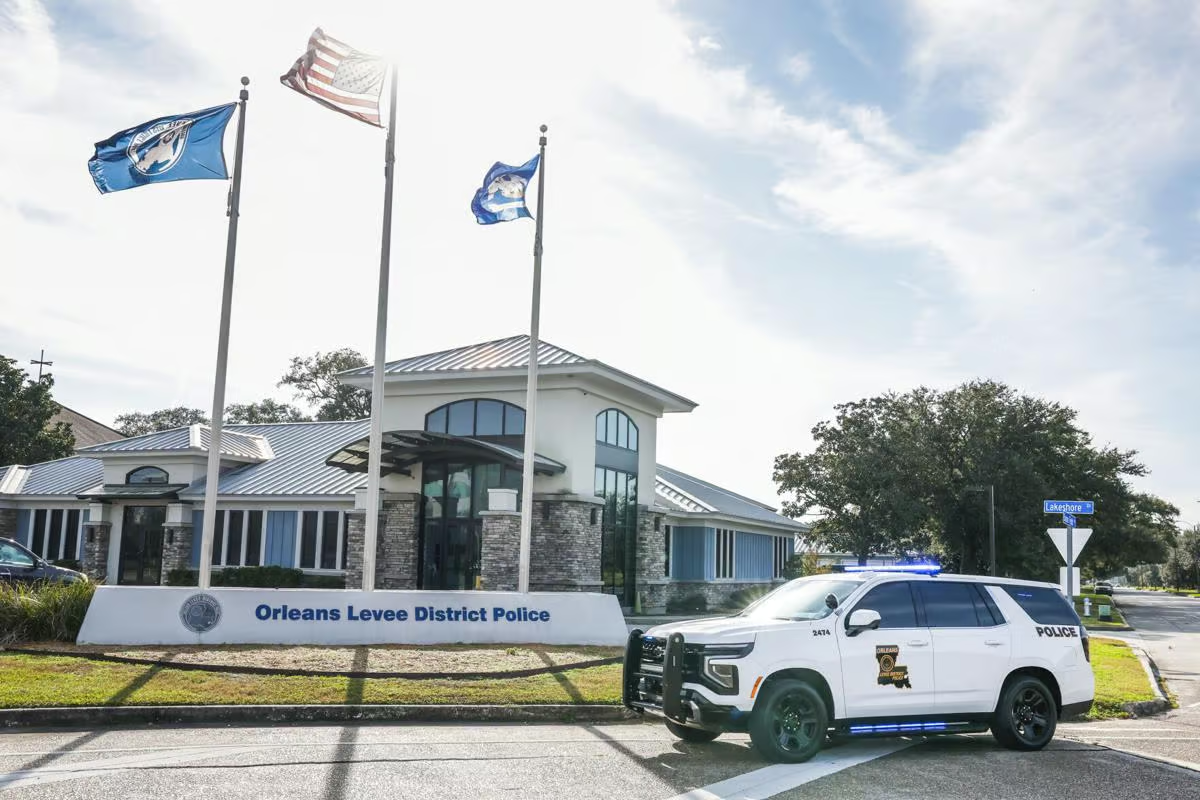
New Orleans levee police to see another spending boost in new budget. What’s behind the increase?
By Alex Lubben
Source: The Times-Picayune | NOLA.com
March 26, 2026
The agency added 19 police positions while its engineering department remains a third unstaffed.
New Orleans’ regional flood control agency has approved a large increase in spending for its levee police for a second consecutive year, arguing a bolstered force is necessary for public safety but drawing renewed concerns that it is straying from its storm protection mission.
The larger police force is part of sweeping changes Gov. Jeff Landry’s allies have pursued at the agency since he took office in 2024. All members of the agency’s board are now Landry appointees, with longer-serving members who opposed his changes having resigned, in some cases while under heavy pressure to do so.
The new board approved the budget unanimously, and without much discussion, at Tuesday’s meeting. The full document was not released publicly beforehand.
“We put a lot of time into this,” said board president Peter Vicari before the budget vote. “I don’t want this to seem like it’s a rubber stamp.”
The total budget for fiscal year 2027, which begins in July, amounts to $91 million. It adds more than a dozen police positions, for a total of 83, while allocating $13.6 million to its police departments, up from $8.4 million two years ago.
The agency, officially known as the Southeast Louisiana Flood Protection Authority-East, will now spend nearly a quarter of its operating budget on its police force.
The agency’s regional director, Jeff Williams, said that its police are central to its primary mission, which is flood control. He described the police as a “flood protection department that also does policing.”
He noted that prior to Hurricane Katrina, the Orleans Levee Board had 75 full-time police officers compared to the current 53 for a three-parish region. After Katrina, the city built new pumps and floodgates that the levee police were tasked with protecting, but reduced the size of the flood agency’s police force.
Businessman Shane Guidry, Landry’s adviser in New Orleans who has been overseeing reforms at the flood agency though he holds no official position in government, stressed that expanding the police force would bolster the New Orleans Police Department, which has long been understaffed.
“My priority is like I’ve always told you,” Guidry said. “Nobody’s house floods. Nobody gets robbed. And nobody’s car gets broken into. Nothing has changed.”
‘Raise alarm bells’
The emphasis on policing has concerned government watchdog groups that pushed for levee board reforms following Katrina.
“Any reference to returning to the way things were before Katrina should raise alarm bells for the public,” said Blair duQuesnay of Citizens for 1 Greater New Orleans, one of the watchdog groups. “Today we have almost a complete reversal from the intention of those reforms, with a board comprised solely of Governor Landry’s picks, seemingly laser focused on building a mini police force rather than maintaining the levees.”
The agency’s operating budget — which funds day-to-day operations and excludes major infrastructure projects — is up 6% agency-wide, increasing from $57 million to nearly $61 million.
Overall headcount is growing, too, from about 200 employees two years ago to about 330 budgeted positions for next year. The current year’s budget called for 303 positions, and its current headcount is 257.
Nineteen of the 28 new staff positions in next year’s budget will be allocated to the police departments. They include four dispatchers for Jefferson Parish and a dedicated human resources administrator for the police. Williams said that some of those positions were approved in last year’s budget but remained unfilled.
In the current fiscal year, 53 of 69 police positions are filled. The engineering department only has 12 of its 18 budgeted positions filled, budget documents show.
Williams said the agency was working to fill open positions while competing with the private sector.
Police Superintendent Joshua Rondeno said that his officers are a crucial component of the agency’s flood protection functions.
“In 2025, we did 31,548 floodgate checks, 13,121 pump station checks, 8,949 shelter checks,” Rondeno said. “We’re the only department out 24/7 proactively identifying deficiencies and reporting them.”
Rondeno has taken on an expanded role at the agency compared to previous police chiefs, also holding the title of chief compliance officer. He earns $208,000 annually, nearly double what his predecessor made.
Watchdog groups, including the Bureau of Governmental Research and the Public Affairs Research Council, expressed frustration that the budget was not made public before the board approved it. Agency staff said that they had followed protocol at the agency, which has not made its full budget proposal available for public inspection before voting on it in recent years.
Becky Mowbray, president and CEO of BGR, said her organization “encourages SLFPA‑East to facilitate public review by making its full proposed budget easily accessible on its website.”
Policing the lakefront
The levee police in Orleans Parish are funded through a city-wide property tax. They protect flood infrastructure across the east bank, but provide general police services primarily to the affluent neighborhoods on the shores of Lake Pontchartrain — Lake Oaks, Lake Vista, Lake Terrace and Lakeshore.
The agency is finalizing an agreement with the New Orleans Police Department to outline how the two agencies will cooperate during emergencies, but the agency’s day-to-day policing will still take place in the lakefront neighborhoods.
Some residents in those neighborhoods are thrilled with the increase in police spending. At Tuesday’s meeting, several said they had noticed an increased police presence since Rondeno took his post.
The agency also plans to buy a dozen new police patrol SUVs and three all-terrain vehicles, for about $1 million. Those purchases account for half of the agency’s planned equipment purchases next year.
After Katrina’s catastrophic levee failures, local groups rallied to overhaul the region’s levee boards, which were seen as rife with patronage and corruption. Those reforms regionalized parish-level levee boards, combining them into the twin Southeast Louisiana flood protection authorities that now oversee the levees and pumps that help keep the New Orleans region safe from hurricane flooding.
Since Landry took office, however, he and his allies have been accused of seeking to return the agency to pre-Katrina levels of political interference. Guidry has said that the agency was rife with corruption before he stepped in — a claim that he has not corroborated.
“At the end of the day, we have lots and lots of levee to patrol,” he said. “And the people in Lakeview are ecstatic about the reduction in crime.”
Fair Use Notice
This site occasionally reprints copyrighted material, the use of which has not always been specifically authorized by the copyright owner. We make such material available in our efforts to advance understanding of issues and to highlight the accomplishments of our affiliates. We believe this constitutes a “fair use” of any such copyrighted material as provided for in section 107 of the US Copyright Law. In accordance with Title 17 U.S.C. Section 107, the material on this site is available without profit. For more information go to: US CODE: Title 17,107. Limitations on exclusive rights: Fair use. If you wish to use copyrighted material from this site for purposes of your own that go beyond “fair use,” you must obtain permission from the copyright owner.